
"coffee farmer earnings"
900 article(s) found
History of coffee in Rwanda
In 1999, 220 coffee growers formed guilds in the Malaba area (formerly part of Butare province) to address the disease. Among the guild members, many farmers were separated from their loved ones by the 1994 mass massacre, while some husbands were jailed or were taken to the traditional Gacaca Court (gacaca) to face trial on charges of participating in the massacre. They named the guild Abauza.

International Coffee Organization
International Coffee Organization during the 19th century, coffee became an important international trade because of the large number of demand. It makes most countries earn foreign exchange from coffee export trade as a source of money income for farmers and is an important trade in most countries. Because the split led to changes in prices and product standards, it ended at a conference in New York in 1962.

Rwandan coffee is the best coffee in Rwanda.
Rwandans have been growing coffee since colonial times, but until 1999, the product was classified as below grade C and was not available on the global market. The reason for the poor quality is that farmers do not have a fixed procedure for cleaning coffee beans, and they do not process coffee fruits according to specifications in time. Buyers pay $0.33 a kilo for coffee beans, farmers keep warm on meager profits from low prices

Rwanda coffee beans flavor taste estate production area introduction Malaba coffee boutique coffee beans introduction
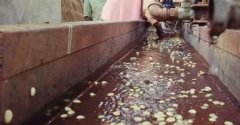
The first problem that Malaba coffee farmers solved was to set up a washing station. Coffee cherries must be transported to a washing station within twelve hours of picking to remove the sugar coating under the outer skin of the coffee beans, otherwise the flavor of the coffee will be greatly damaged. In July 2001, the Rwandan government, through UNR, the Office des Cultures Industrielles du Rwanda (OCIR-Caf), ACD,

Is Colombian coffee black? Colombian coffee culture how to drink Colombian coffee
Coffee workshop (Wechat official account cafe_style) Coffee farmers around the world are committed to producing high quality coffee beans. Cup testing enables them to connect with raw bean buyers who pay attention to the quality of coffee beans, thus earning better income, while avoiding price exploitation by merchants. In recent years, Fair Trade Coffee Cooperatives have been in succession

Fine coffee Rwanda coffee producing area Western Province Lutexiluo producing area
Rwandans have been growing coffee since colonial times, but until 1999, the product was classified as below grade C and was not available on the global market. The reason for the poor quality is that farmers do not have a fixed procedure for cleaning coffee beans, and they do not process coffee fruits according to specifications in time. Buyers pay $0.33 a kilo for coffee beans, farmers keep warm on meager profits from low prices

How about Rwandan coffee? Musa Gata Guana processing station sun red bourbon introduction
Rwanda Musa Gata Guana processing Station Rwanda is famous for its "Land of Thousand Hills" and the biographical film "Land of Gorillas in the Mist". The country is less than half the size of Scotland, but it has more than 3 million inhabitants. It is a small landlocked country in East Africa with hilly terrain and fertile soil.

Characteristics of grinding degree of Ethiopian coffee introduction of high-quality coffee beans
Coffee is Ethiopia's most important export cash crop and the main source of Ethiopia's foreign exchange earnings. Ethiopia's coffee exports account for about 3% of the world market, making it the eighth largest coffee exporter in the world. Coffee exports increased steadily from 58000 tons in 1990 to 110000 tons in 1995-1996 and remained at this level in the following years. 2001-2002
Introduction to the information of Columbia's Linglong producing area.
Colombia is currently the third largest coffee producer in the world, after Brazil and Vietnam. It first planted commercial beans in the 1830s. In the 20th century, coffee accounted for the largest number of exported crops. The mountainous terrain, coupled with a variety of tropical microclimate, provides an ideal planting environment. 75% of the total output is sold abroad, making it the most important source of foreign exchange earnings. Traditionally ripe coffee cherries are

Malaba coffee beans in the western coffee producing area of Rwanda
Maraba coffee beans are manually selected and classified according to quality. PEARL brought coffee experts to Rwanda to maintain contact with the seller, the Public Coffee Company (Community Coffee) in Louisy, USA, and to send samples to Louisiana. In June 2002, public coffee

Introduction to Chilmel Manor in Rwanda Malaba Coffee Bean
Malaba coffee beans are manually selected and classified according to quality. PEARL brought coffee experts to Rwanda to maintain contact with the seller, the Public Coffee Company (Community Coffee) in Louisy, USA, and to send samples to Louisiana. In June 2002, representatives of public coffee visited Malaba. At that time, the current general manager of Rwanda

How much does a cup of coffee cost?
Pickers pluck coffee beans from a coffee plantation on the outskirts of San Jose, Costa Rica, to a Cajueira hanging from his chest. In Central America, the world's main coffee-producing region, cajuela is both a coffee basket and a unit of work. Pick a cajuela (15kg) coffee bean for $2. Although that's not enough to buy a cup at Starbucks in San Jose.

Yunnan coffee output value is expected to reach 35 billion yuan in 2020
China is one of the countries with the fastest growth in coffee consumption in the world, with a recent consumption of 90,000 tons of coffee, which is still relatively low compared with major Asian consumers such as Japan and South Korea. However, China's coffee consumption is growing at a rate of more than 20% per year, far higher than the world's 3% growth level, and the market space is huge. According to the analysis of global coffee production and marketing situation, by 2020, cloud
Detailed introduction of Musasa Cooperative of Gatta Guana processing Station of Musasha Group in Rwanda
For professional baristas, please follow the coffee workshop (Wechat official account qianjiecoffee) Rwanda is famous for its "Land of Thousand Hills" and the biographical film "Land of Gorillas in the Mist". The country is less than half the size of Scotland, but it has more than 3 million residents and is a landlocked part of East Africa.
Yunnan coffee industry is ready to start.
Zhang Kui said that when he grows 50 mu of coffee, his annual net income can reach 170,000 yuan to 80,000 yuan, while planting corn in the same area can only earn 10,000 to 20,000 yuan a year. Due to the guidance of policy and the high profit of planting coffee, the planting area of coffee in Yunnan has increased from 23000 mu in 1988 to 1.02 million mu now.
Name of the producing country of the International Coffee Organization
International Coffee Organization during the 19th century, coffee became an important international trade because of the large number of demand. It makes most countries earn foreign exchange from coffee export trade as a source of money income for farmers and is an important trade in most countries. Because the split led to changes in prices and product standards, it ended at a conference in New York in 1962.
Yunnan small seed Coffee attracts domestic and Foreign buyers
On the 213 National Highway from Xishuangbanna to Pu'er, when cars drill out of a tunnel, small coffee trees can be seen everywhere. The coffee harvest season is coming up. You see, this land is planted in the sun, there are no shade trees, and there will be insect pests in the future. Wen Liubin, an employee of Nestl é's Yunnan Coffee Company, told the Economic Information Daily (Weibo) that he had been on this road a year after graduating from college.
Rwanda Coffee
Global coffee producing area-since the 1920s, Rwanda Arabica coffee grown in Rwanda has been famous for its unique fruit sweetness and rich grass aroma. In recent years, the government of Rwanda has taken positive measures to vigorously promote coffee production, set up coffee production cooperatives in various places, and give technical guidance and financial support to farmers, so that coffee production can be achieved.

Forecast of Yunnan Coffee quotation Price towards beans in 2017
China is one of the countries with the fastest growth in coffee consumption in the world, with a coffee consumption of 90,000 tons a few days ago, which is still relatively low compared with major consumer countries such as Japan and South Korea in Asia. However, China's coffee consumption is growing at an annual rate of more than 20%, which is far higher than the 3% growth level in the world, and the market space is huge. According to the analysis of the global coffee production and marketing situation, by 2020, Yunnan

Historical description of the story of coffee beans in Ethiopia
The history of the Ethiopian coffee bean story describes that Ethiopians drink coffee from small earless cups with a capacity of 3 ounces. after the coffee powder boils for the first time in a clay pot, the hostess pours the coffee into the cup and adds a spoonful of sugar. The coffee made in this way is very thick, and the coffee grounds are not filtered. Although most of them remain at the bottom of the cup, there is still powder suspended in the coffee, which is difficult for those who are not used to it.